
After the Hurricane: Why Power Restoration Can Take Days—and How to Stay Safe in the Meantime
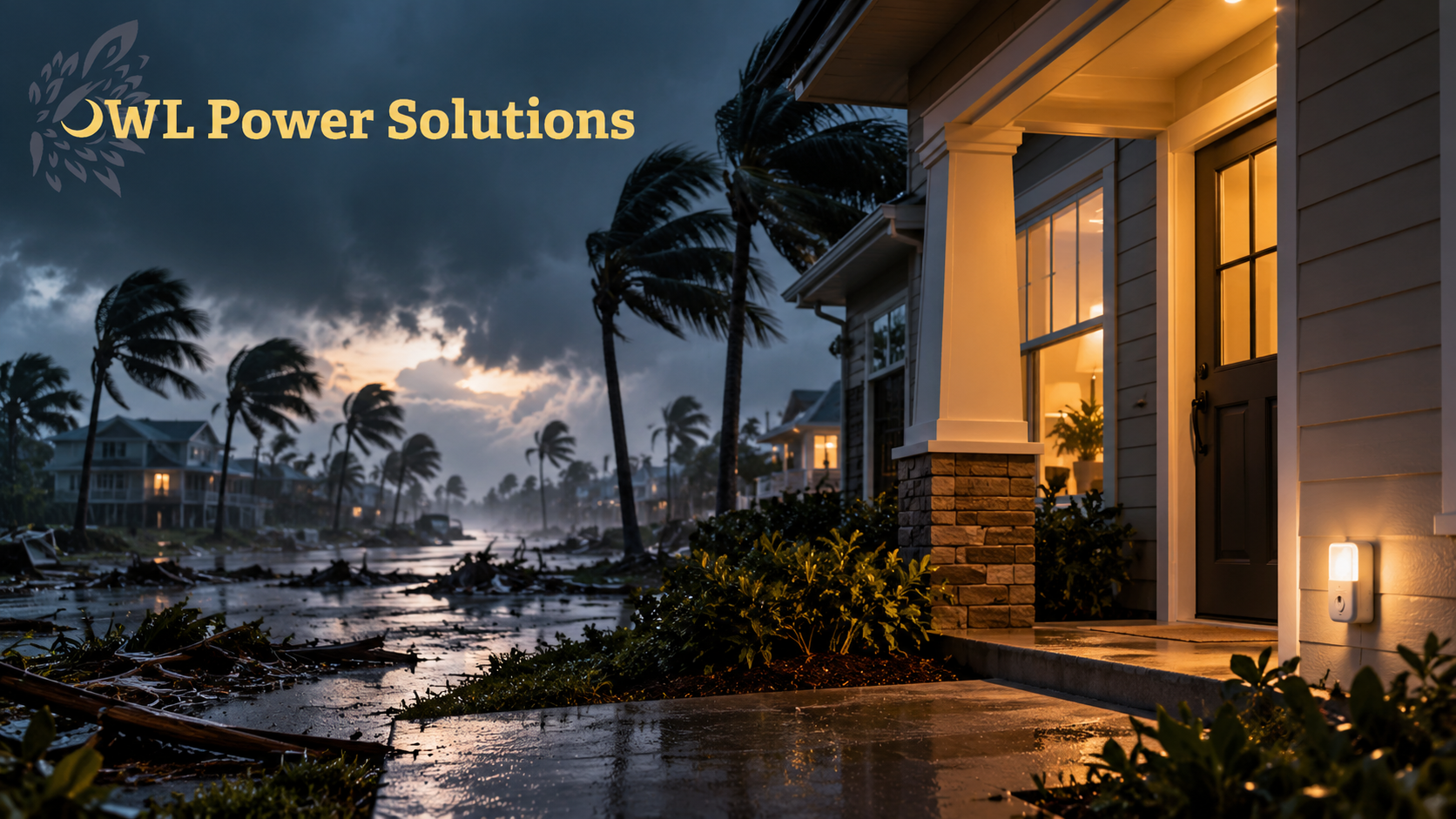
Why Does It Take So Long to Restore Power After a Hurricane?
Modern electrical grids are complex systems that depend on power plants, substations, transmission lines, distribution equipment, and local infrastructure working together.
When a hurricane moves through a region, multiple parts of that system can be damaged simultaneously.
Fallen trees and damaged power lines: Hurricane-force winds can bring down trees, utility poles, and electrical lines across large geographic areas.
Flooded electrical infrastructure: Storm surge and heavy rainfall can damage substations, transformers, and other critical equipment. Flooded facilities may need to be inspected and repaired before they can safely operate.
Blocked roads and inaccessible neighborhoods: Utility crews cannot always reach damaged infrastructure immediately. Flooding, debris, and damaged bridges can delay restoration efforts.
Widespread equipment damage: Unlike a localized outage caused by a single damaged transformer, hurricanes can create thousands of individual problems throughout the electrical grid.
Safety inspections: Restoring electricity too quickly can create additional hazards. Crews must ensure damaged equipment and electrical systems can safely handle restored power.
Utility companies generally prioritize repairs that restore electricity to the greatest number of customers and support essential infrastructure, such as hospitals and emergency services.
That means individual neighborhoods and homes may remain without electricity even after nearby communities have power again.
The Hidden Challenges of Living Without Electricity
Most people associate a power outage with losing their lights, television, and air conditioning.
But extended outages affect far more than convenience.
Everyday Routines Become More Difficult
Without electricity, tasks that normally require little thought can become surprisingly challenging.
Preparing meals, finding supplies, getting children ready for bed, navigating stairways, and moving through unfamiliar spaces all become more complicated.
As daylight fades, even basic household activities can require additional planning.
Nighttime Becomes a Safety Concern
One of the most overlooked challenges of an extended power outage is navigating a dark home.
During the day, windows and natural light may provide enough visibility to move around safely. But once the sun sets, hallways, bathrooms, staircases, and interior rooms can become completely dark.
For families with young children, older adults, or anyone with mobility challenges, this creates additional safety concerns.
And when power restoration takes several days, navigating darkness becomes a recurring problem rather than a one-time inconvenience.
Communication Becomes More Important
During the recovery period, families may need to receive utility updates, monitor weather alerts, contact loved ones, or coordinate assistance.
Keeping phones and other communication devices charged becomes increasingly important.
Using a smartphone as a flashlight may seem convenient, but it also consumes battery power that could be needed for communication.
Having separate, dependable emergency lighting can help preserve phone batteries for more essential uses.
The First 72 Hours After a Hurricane
The first three days following a major hurricane can be particularly challenging.
Emergency crews may still be assessing damage, utility restoration estimates may be uncertain, and stores or gas stations may not be operating normally.
During this period, homeowners should focus on maintaining a safe living environment while monitoring official guidance.
1. Assess Your Home Carefully
Before returning to or moving through storm-damaged areas, look for signs of structural damage, standing water, downed electrical lines, or other hazards.
Never approach fallen power lines, even if they appear inactive.
If your home has experienced significant flooding or electrical damage, contact qualified professionals before restoring electrical service.
2. Establish Safe Lighting Throughout the Home
Don’t wait until sunset to think about lighting.
Identify the rooms and pathways family members will need to access after dark, including bedrooms, bathrooms, kitchens, stairways, and exits.
Use battery-powered lighting rather than candles, which introduce an unnecessary fire risk.
For homeowners planning ahead of hurricane season, outlet-mounted emergency lighting solutions such as briteOwl® from Owl Power Solutions can help provide immediate illumination when normal electrical power is interrupted.
Strategically placed backup lights can make navigating the home easier during the first moments of an outage and throughout the recovery period, subject to their available battery runtime.
3. Protect Food and Drinking Water
Extended power outages can affect refrigeration and access to safe drinking water.
According to general USDA food safety guidance, a refrigerator typically keeps food cold for approximately four hours without power if the door remains closed. A full freezer may maintain a safe temperature for approximately 48 hours, or 24 hours if half full, when kept closed.
Follow local drinking water advisories, particularly if flooding has affected municipal water systems.
4. Use Generators Safely
Portable generators can provide valuable temporary power, but improper operation can be deadly.
Never operate a generator indoors, inside a garage, or near doors, windows, or vents. Generators should be positioned outdoors at least 20 feet from the home, with exhaust directed away from occupied spaces.
Carbon monoxide is odorless and can accumulate quickly.
Battery-powered carbon monoxide alarms are another important consideration for hurricane-prone households.
5. Monitor Local Restoration Updates
Utility providers often share estimated restoration times, outage maps, and safety information through their websites and communication channels.
Remember that restoration estimates can change as crews discover additional damage.
Planning for a longer outage than initially expected can help reduce frustration and prevent unnecessary risks.
Why Emergency Lighting Deserves Its Own Place in Hurricane Recovery
Backup generators, portable power stations, and emergency supply kits receive plenty of attention during hurricane season.
But lighting is often treated as an afterthought.
The reality is that reliable illumination supports nearly every other part of a household’s recovery plan.
You need light to find medications, locate emergency supplies, navigate to the bathroom, check on family members, and safely move through the home.
And when an outage begins unexpectedly at night, the first few seconds can be especially disorienting.
That’s where automatic emergency lighting offers a practical advantage.
briteOwl® from Owl Power Solutions is designed to help homeowners prepare for unexpected power interruptions with convenient, outlet-mounted backup lighting.
Rather than relying entirely on a flashlight stored in a drawer, homeowners can place backup lighting in important areas before severe weather arrives.
This creates another layer of household readiness without requiring complicated emergency preparations.
For extended outages, outlet-mounted lights should be part of a broader lighting plan that also includes charged portable lights, spare batteries, and a way to recharge devices when possible.
The Difference Between Surviving a Storm and Recovering From One
Hurricane preparedness messaging often focuses on the hours leading up to landfall.
Homeowners are reminded to secure outdoor furniture, stock emergency supplies, charge electronics, and monitor evacuation orders.
Those steps are essential.
But preparing for recovery deserves just as much attention.
Consider the difference between these two situations:
A family has flashlights stored in a kitchen drawer, but when the electricity goes out overnight, everyone must navigate the dark to find them.
Another family has strategically positioned backup lighting throughout the home, allowing family members to orient themselves and reach their emergency supplies more easily.
Both households may have prepared for the hurricane, but their experience during the outage can be very different.
Thoughtful preparation isn’t always about purchasing large equipment or making major changes to your home.
Sometimes, small improvements make everyday life during an emergency significantly easier.
Hurricane Season Doesn’t End When the Storm Passes
The Atlantic hurricane season officially runs from June 1 through November 30, but the effects of a major storm can continue long after the weather clears.
Power restoration, infrastructure repairs, debris removal, and household recovery can take considerable time.
For homeowners in hurricane-prone areas, preparedness should include both the immediate threat of severe weather and the days that may follow.
That means thinking beyond bottled water, canned food, and weather alerts.
It means considering how your family will navigate the home, communicate, prepare meals, access essential supplies, and maintain safe routines without electricity.
Reliable emergency lighting is one simple but important part of that plan.
- Best Emergency Backup Lighting for Homes: Comparing briteOwl®, Flashlights, Lanterns, and Other Options - October 19, 2026
- After the Hurricane: Why Power Restoration Can Take Days—and How to Stay Safe in the Meantime - October 19, 2026
- Emergency Backup Lighting Explained: Why Every Home Needs Reliable Lighting During Power Outages - October 2, 2026